The Rise of EV Awareness in Developing Markets
Across developing economies, attitudes toward mobility are quietly but decisively shifting. Escalating fuel prices, urban air quality concerns, and global climate narratives have reached consumers who once prioritized only upfront cost. Full electric vehicles generate interest, yet the reality is complex. Charging infrastructure remains inconsistent, power grids are fragile, and new EV pricing is often misaligned with household incomes.
In this environment, buyers are not abandoning environmental responsibility. Instead, they are redefining it. The focus has moved toward efficiency, durability, and emissions reduction within realistic constraints. This recalibration has created fertile ground for the Japanese used car segment, which offers a pragmatic response to EV aspirations without demanding radical lifestyle changes.
Why Japanese Automotive Engineering Fits Transitional Markets
Japanese automotive engineering has long emphasized kaizen, the philosophy of continuous incremental improvement. This mindset results in vehicles designed for longevity rather than obsolescence. Components are engineered with conservative tolerances, systems are stress-tested for extended service life, and maintenance simplicity is rarely an afterthought.
For developing markets, this approach aligns perfectly with economic and environmental realities. A car that remains mechanically sound for decades reduces manufacturing demand, material extraction, and waste generation. Sustainability, in this sense, is not abstract. It is embedded in metal fatigue resistance, thermal efficiency, and drivetrain resilience. A Japanese used car therefore represents not just transportation, but an extended lifecycle asset.
Japanese Used Cars as a Practical Bridge to Electrification
Rather than leaping directly from conventional combustion engines to full electric mobility, many consumers are choosing an intermediate path. Japanese manufacturers anticipated this transition years ago. Hybrid and fuel-efficient internal combustion models were refined long before EVs became fashionable.
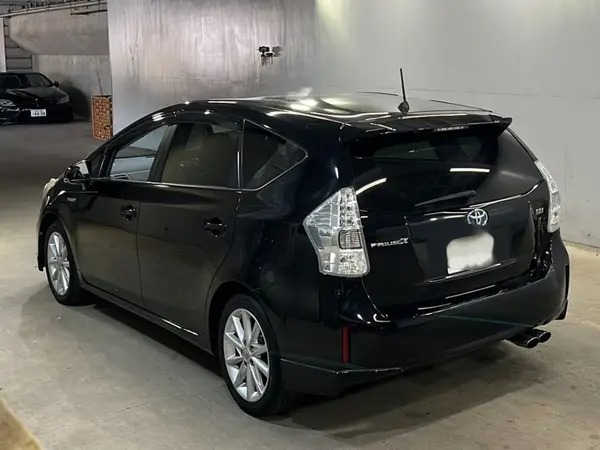
A Japanese used car equipped with hybrid technology delivers substantial emissions reduction without dependence on charging networks. Even non-hybrid models often feature lightweight construction, optimized combustion cycles, and intelligent transmission tuning. These attributes reduce fuel consumption in dense urban traffic where inefficiency is most pronounced. As a transitional solution, such vehicles quietly outperform expectations.
Battery Longevity, Emissions, and Real-World Efficiency
Skepticism around battery degradation has tempered enthusiasm for electric vehicles in emerging markets. Replacement costs, thermal sensitivity, and disposal concerns are widely discussed. Japanese hybrids, however, have established an enviable reputation for battery endurance. Robust battery management systems and conservative charge-discharge cycles contribute to operational longevity that often exceeds a decade.
Emissions performance also deserves nuance. While laboratory figures dominate marketing narratives, real-world efficiency tells a more relevant story. Japanese used car models consistently demonstrate stable emissions behavior under variable fuel quality, traffic congestion, and climatic extremes. This reliability makes them environmentally credible choices rather than symbolic ones.
Affordability Without Compromising Technology
One of the most compelling aspects of the Japanese used car market is technological democratization. Features once reserved for premium segments become accessible through depreciation. Advanced driver assistance systems, regenerative braking, intelligent climate control, and energy monitoring interfaces are commonly found in imported used models.
This access reshapes buyer expectations. Consumers no longer view efficiency as a sacrifice. Instead, it becomes part of a broader value proposition that includes safety, comfort, and reliability. Importantly, strong resale demand ensures that these vehicles retain value, reinforcing their economic logic. Affordability here is not minimalism. It is optimized value density.
The Growing Appeal in Pakistan and Similar Economies
Pakistan exemplifies the broader trend across developing markets. Urban congestion, fluctuating fuel prices, and limited EV infrastructure create a demand for vehicles that balance conscience with convenience. Japanese imports have filled this gap with remarkable consistency.
Local buyers increasingly recognize these models as the best japanese cars in pakistan, not because of branding alone, but due to performance under local conditions. Suspension tuning suited for imperfect roads, engines tolerant of variable fuel quality, and reliable climate systems for extreme heat all contribute to their appeal. Environmental awareness, in this context, is inseparable from functional reliability.
Long-Term Environmental and Economic Impact
The environmental benefit of extending a vehicle’s useful life is often underestimated. Manufacturing a new car generates substantial carbon emissions before it ever reaches the road. By contrast, integrating a Japanese used car into continued service leverages embodied energy already spent. This aligns with circular economy principles that prioritize reuse over replacement.
Economically, this approach stabilizes household transportation costs while reducing dependency on volatile fuel markets. Gradual decarbonization becomes achievable without infrastructure shocks or financial strain. For EV-conscious buyers navigating imperfect systems, the choice is neither ideological nor impulsive. It is measured, rational, and increasingly mainstream.
In developing markets seeking sustainable mobility without overextension, the Japanese used car has emerged not as a compromise, but as a calculated solution grounded in engineering integrity and real-world pragmatism.