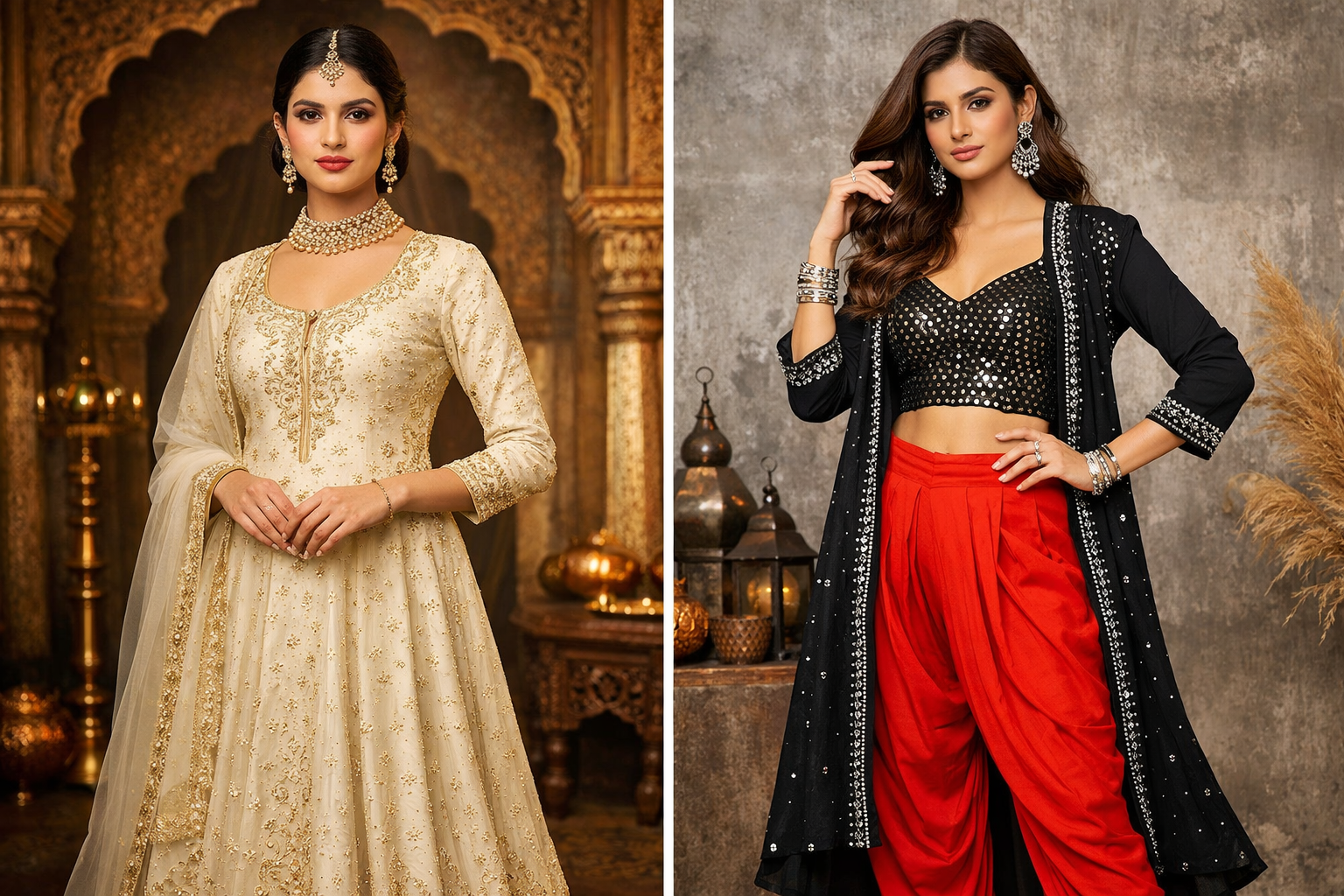
Style is rarely about rules. It is more often about instinct. You open your wardrobe, look at your options, and somehow already know what feels right. Some days, tradition feels comforting. On others, you want something lighter, easier, and a little unexpected. That is where the choice between classic Indian dressing and fusion fashion begins to matter.
Indian fashion today offers far more freedom than it did in the past. Alongside traditional Indian dresses and Indian suits, there is growing space for Indo-Western outfits that feel modern without seeming disconnected. Understanding how these two styles differ makes choosing what to wear less confusing and far more personal.
How Are Classic and Fusion Styles Actually Different?
Classic dressing is rooted in familiarity. It follows silhouettes that have existed for decades, sometimes centuries. Sarees, lehengas, shararas, and Indian suits are not just garments; they are part of cultural memory. They are worn knowing what they represent and when they are appropriate.
Fusion fashion works differently. Indo-Western outfits draw inspiration from tradition but are not bound by it. The cuts are softer, the layering lighter, and the styling more flexible. Indo-Western dresses for women often allow you to move through an event without constantly adjusting pleats or layers. They feel designed for modern schedules, where comfort and appearance need to coexist. Overall, the difference lies less in appearance and more in experience.
What Kind of Fusion Outfits Feel Relevant Today?
- Indo-Western Anarkali for a Royal Look:
Fusion wear has become popular because it fits into real life. Many Indo-Western outfits are built around comfort without losing visual impact. Anarkali-inspired silhouettes with contemporary tailoring are one example. They carry the flow of traditional design but feel easier to wear for long hours.

- Indo-Western Saree for a Glam Look
Another category that has gained attention is the pre-draped saree. These Indo-Western dresses for women retain the elegance of a saree while removing the complexity that often comes with it. They feel practical, especially for social gatherings where ease of movement matters.
- Indo-Western Jacket-Style Dresses for Comfort
Dhoti skirt sets with modern layers or shrugs also represent how Indo-Western outfits rethink tradition. They feel relaxed, expressive, and less structured, making them suitable for events that sit somewhere between formal and casual.

These outfits appeal to women who prefer clothing that adapts to their pace, not the other way around.
Why Do Fusion Styles Feel So Easy to Wear?
One reason Indo-Western outfits are gaining popularity is freedom. They allow experimentation without committing to heavy styling. Indo-Western dresses for women often require fewer accessories and less preparation, which makes them appealing for modern celebrations.
They also transition well. A fusion outfit worn during the day can work just as easily in the evening with a change of footwear or jewellery. That flexibility fits into busy lifestyles where one outfit often needs to do more than one job.
What Defines Traditional Indian Dressing?
- Traditional Lehengas for Flair
Classic Indian dresses are deeply connected to ceremony. They are chosen when the occasion carries meaning. Lehengas, for example, remain central to wedding celebrations because of their structure and presence.

- Traditional Sarees for an Elegant Look
Sarees continue to hold emotional value. Silk sarees with woven or embroidered detailing are often worn during family occasions, making them more than just outfits.
- Classic Sharara Styles for Comfort
Indian suits, including sharara styles, balance structure and comfort. They are often chosen when the setting calls for tradition, but the wearer still wants ease.
These Indian dresses feel purposeful. They are worn with intention, not just for appearance.
Why Do Traditional Styles Still Feel So Relevant?
Indian suits and other classic Indian dresses remain relevant because they do not rely on trends. They offer consistency. Many people return to them because they feel appropriate, flattering, and emotionally reassuring.
There is also a sense of assurance that comes with classic dressing. You know when and where these outfits belong. That confidence is hard to replace, even as fusion fashion grows.
Which Style Should You Choose?
There is no single answer. The choice depends on how you live and how you feel in your clothes. If you enjoy structure, ceremony, and tradition, Indian dresses and Indian suits may feel more natural. They suit occasions where cultural expression matters.
If your style leans toward flexibility and comfort, Indo-Western outfits might define your style better. Indo-Western dresses for women work well for gatherings that allow personal expression without strict expectations. Many women choose fusion styles for social events and classic outfits for formal milestones.
Can Both Styles Coexist in One Wardrobe?
They already do. Most wardrobes today hold a mix of Indian dresses and Indo-Western outfits. This balance allows dressing to feel intuitive rather than restrictive. You choose based on mood, occasion, and comfort rather than categories.
Conclusion
Classic and fusion styles represent two different ways of dressing, both equally valid. Indian dresses offer tradition, familiarity, and cultural depth. Indo-Western outfits bring ease, movement, and modern expression. Indo-Western dresses for women show how tradition can evolve, while Indian suits continue to anchor fashion in heritage. In the end, the outfit that defines your style is the one that feels most like you.