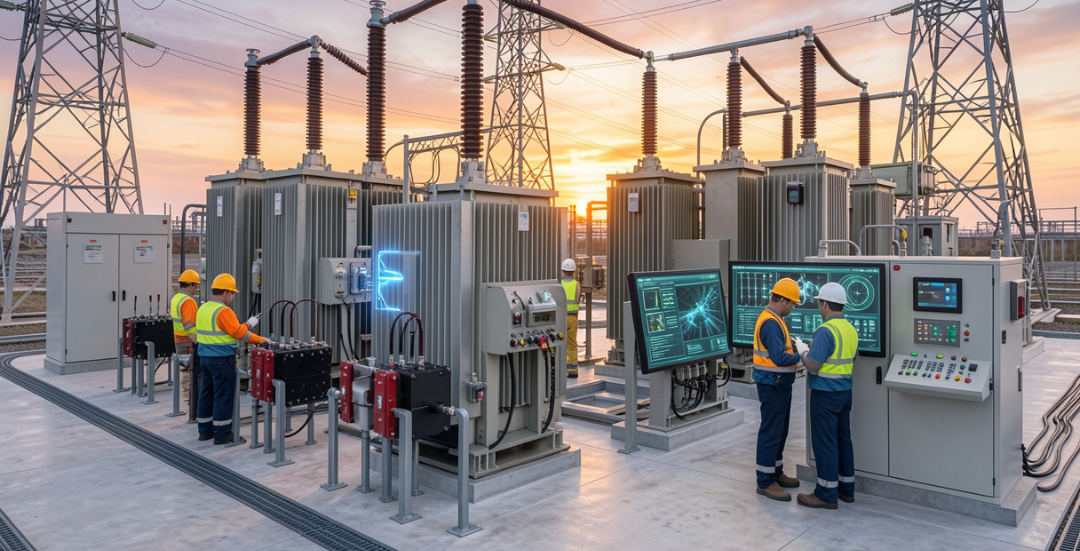
Modern power systems are evolving rapidly, driven by renewable integration, increased demand, and stricter regulatory frameworks. In this environment, integrating power substation design with grid compliance strategies is no longer optional—it’s essential. A well-designed substation must not only deliver reliable performance but also meet industry regulations and standards from the very beginning.
For utilities, developers, and industrial operators, aligning engineering practices with compliance requirements reduces risks, avoids costly redesigns, and ensures smooth project execution. This guide explains how to effectively combine technical design with compliance strategies to build resilient and future-ready substations.
The Role of Substation Design in Modern Grids
Substations are critical nodes within the electrical grid, responsible for voltage transformation, system protection, and power distribution. With increasing grid complexity, substation design & engineering must address not only performance and safety but also flexibility and scalability.
Today’s substations must accommodate renewable energy sources, manage bidirectional power flows, and support digital monitoring systems. This means engineers must consider factors such as system stability, fault tolerance, and communication infrastructure during the design phase.
When compliance is integrated early, the design becomes more robust, ensuring it aligns with both operational goals and regulatory expectations.
Understanding Grid Compliance Requirements
Grid compliance refers to adherence to standards and regulations that govern the safe and reliable operation of power systems. In North America, organizations like NERC (North American Electric Reliability Corporation) set these standards, while other regions have their own regulatory bodies.
Working with experienced nerc compliance consultants or similar experts helps ensure that substations meet requirements related to:
Reliability standards
Protection systems coordination
Cybersecurity protocols
Operational reporting and documentation
Compliance is not just about passing audits—it directly impacts grid stability and operational safety. Non-compliance can result in penalties, operational disruptions, and reputational risks.
Integrating Compliance into the Design Phase
One of the most effective strategies is to incorporate compliance requirements during the initial design stage rather than treating them as an afterthought.
This involves aligning engineering specifications with regulatory standards from the beginning. For example, protection schemes should be designed to meet fault clearing times required by grid codes. Similarly, equipment selection should consider compliance with testing and certification standards.
By integrating compliance early, project teams can avoid costly modifications later. It also ensures smoother approvals and faster commissioning, as regulatory requirements are already embedded in the design.
Coordination Between Engineering and Compliance Teams
Successful integration requires close collaboration between design engineers and compliance specialists. Often, these teams work in silos, leading to gaps between technical design and regulatory expectations.
Bringing these teams together early in the project lifecycle creates a unified approach. Engineers can design systems that meet compliance requirements, while compliance experts can provide insights into regulatory updates and documentation needs.
This collaboration is especially important for complex projects involving renewable integration or grid modernization, where compliance requirements can be more dynamic.
Leveraging Technology for Smarter Compliance
Digital tools and advanced software are transforming how substations are designed and managed. Modern engineering platforms allow for simulation, modeling, and validation of systems before implementation.
These tools can help identify compliance gaps early by simulating fault conditions, load flows, and system behavior under different scenarios. Automated documentation and reporting features also simplify compliance processes.
In addition, digital substations with integrated monitoring systems enable real-time data collection, making it easier to maintain compliance throughout the operational lifecycle.
Future-Proofing Substation Design
As grid regulations continue to evolve, future-proofing is a critical consideration. Designing substations with flexibility in mind ensures they can adapt to new standards and technologies.
This includes incorporating scalable architectures, modular equipment, and advanced communication systems. Future-ready designs also consider the integration of renewable energy, energy storage, and smart grid technologies.
By combining forward-thinking engineering with strong compliance strategies, organizations can build substations that remain efficient and compliant for years to come.
Conclusion
Integrating power substation design with grid compliance strategies is essential for building reliable and regulation-ready power systems. By aligning engineering practices with compliance requirements from the start, organizations can reduce risks, improve efficiency, and ensure long-term operational success.
Collaboration between engineers and nerc compliance consultants, along with the use of advanced tools and future-focused design approaches, plays a key role in achieving this integration.
In an increasingly complex energy landscape, the ability to combine technical excellence with regulatory compliance is what sets successful projects apart.