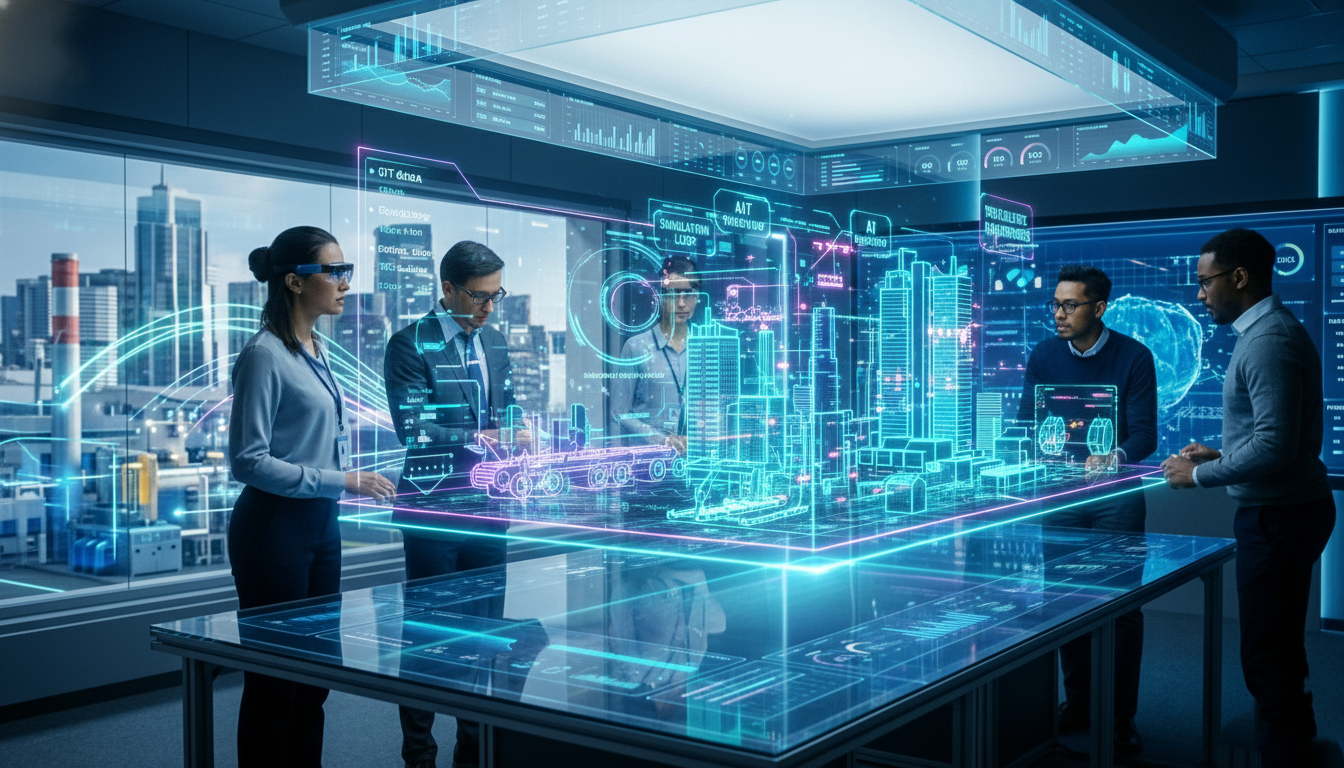
The landscape of modern business operations is undergoing a profound transformation, driven by the convergence of advanced analytics, artificial intelligence, and digital twin technology. As organizations worldwide seek competitive advantages through operational excellence, digital twins have emerged as the cornerstone of intelligent operations, enabling unprecedented levels of visibility, control, and optimization across complex systems and processes.
The Evolution of Operational Intelligence
Traditional operational management relied heavily on periodic inspections, scheduled maintenance, and reactive problem-solving. This approach, while functional, left organizations operating with significant blind spots, unable to anticipate problems before they occurred or optimize performance in real-time. Digital twin technology fundamentally changes this paradigm by creating dynamic digital visualization models that provide continuous insight into operations.
A digital twin represents far more than a static blueprint or computer model. It is a living, breathing digital replica that evolves alongside its physical counterpart, ingesting real-time data from sensors, systems, and external sources to maintain perfect synchronization with reality. This continuous connection transforms digital visualization from a planning tool into an operational command center where decisions can be tested, validated, and executed with confidence.
Foundations of Intelligent Operations
Intelligent operations built on digital twin technology rest on several foundational pillars. First, comprehensive data collection creates the raw material for insight. Modern digital twins aggregate information from IoT sensors, enterprise systems, external data feeds, and even human operators, creating a holistic view that captures every dimension of operational performance.
Second, advanced analytics and artificial intelligence transform this data deluge into actionable intelligence. Machine learning algorithms identify patterns, anomalies, and optimization opportunities within the digital visualization environment. Predictive models forecast future states, enabling proactive intervention before problems cascade into failures.
Third, simulation capabilities allow organizations to explore “what-if” scenarios safely. Digital twin technology enables operators to test changes, evaluate alternatives, and stress-test systems within the digital realm before committing resources in the physical world. This dramatically reduces the risk associated with operational improvements and innovation initiatives.
Real-Time Operational Visibility
One of the most transformative aspects of digital twin technology is the unprecedented visibility it provides into operational processes. Traditional monitoring systems offer fragmented views, with different departments maintaining separate dashboards and metrics. Digital twins unify these perspectives into a comprehensive digital visualization that reveals how different elements interact and influence overall performance.
Consider a modern manufacturing operation. A production line digital twin integrates data from robotic systems, quality control sensors, material handling equipment, and environmental monitors. Operators can observe material flow, identify bottlenecks, monitor quality metrics, and track energy consumption simultaneously within a single digital visualization interface. This holistic view enables rapid diagnosis when problems arise and reveals optimization opportunities that would remain hidden in siloed monitoring approaches.
The real-time nature of digital twin technology means that insights are always current. Unlike traditional business intelligence systems that operate on historical data with inherent delays, digital twins reflect the present state of operations. This temporal immediacy enables split-second decision-making in dynamic environments where conditions change rapidly and windows of opportunity close quickly.
Predictive Maintenance Revolution
Maintenance operations have been revolutionized by digital twin technology, shifting from time-based schedules and reactive repairs to predictive strategies that optimize asset reliability and lifecycle costs. Digital twins continuously monitor equipment health through digital visualization of performance parameters, comparing actual behavior against baseline models to detect subtle deviations that signal impending failures.
Advanced digital twin implementations incorporate physics-based models that simulate stress, wear, and degradation processes. By understanding how equipment ages under specific operating conditions, digital twins can predict remaining useful life with remarkable accuracy. Maintenance teams receive advance warning of problems, allowing them to schedule interventions during planned downtime and procure replacement parts before emergencies arise.
The economic impact of predictive maintenance enabled by digital twin technology is substantial. Organizations report reductions in unplanned downtime of 30-50%, extensions in equipment life of 20-40%, and decreases in maintenance costs of 10-20%. These improvements directly impact profitability while enhancing operational reliability and customer satisfaction.
Supply Chain and Logistics Optimization
Supply chain operations have grown increasingly complex as global networks, just-in-time manufacturing, and e-commerce expectations collide. Digital twin technology brings order to this complexity through comprehensive digital visualization of end-to-end supply chain processes.
Logistics digital twins model the flow of materials and products through networks of suppliers, manufacturing facilities, distribution centers, and delivery routes. Real-time data from tracking systems, transportation providers, and inventory management platforms feeds the digital twin, creating an always-current view of supply chain state and performance.
When disruptions occur—whether from weather events, transportation delays, supplier issues, or demand surges—digital twin technology enables rapid response. Operators can simulate alternative routing options, evaluate the impact of different prioritization strategies, and optimize resource allocation within the digital visualization environment before executing changes in the physical supply chain.
Demand forecasting becomes more accurate when integrated with digital twin technology. By modeling the complex relationships between market signals, inventory levels, production capacity, and logistics constraints, digital twins help organizations position inventory optimally, reducing both stockouts and excess inventory carrying costs.
Energy and Utilities Management
The energy sector has emerged as a leading adopter of digital twin technology, applying digital visualization to generation assets, transmission infrastructure, and distribution networks. Power plant digital twins monitor thousands of components simultaneously, optimizing combustion processes, predicting equipment failures, and maximizing efficiency while ensuring emissions compliance.
Grid operators use digital twin technology to manage the increasingly complex challenge of balancing supply and demand in real-time. As renewable energy sources like wind and solar introduce variability, grid digital twins simulate different scenarios, helping operators maintain stability while integrating sustainable generation sources.
Utility companies deploy digital twins to manage aging infrastructure more effectively. Water and wastewater systems, gas pipelines, and electrical distribution networks all benefit from digital visualization that reveals condition, predicts failures, and optimizes maintenance investments. These applications are particularly valuable for assets that are expensive to inspect physically or located in challenging environments.
Smart building operations leverage digital twin technology to optimize energy consumption while maintaining occupant comfort. HVAC system digital twins balance temperature, humidity, air quality, and energy costs dynamically, responding to occupancy patterns, weather conditions, and utility rates. Organizations implementing building digital twins typically achieve energy savings of 15-30% while improving occupant satisfaction.
Process Industries Transformation
Chemical plants, refineries, food processing facilities, and pharmaceutical manufacturers operate complex continuous processes where small optimizations yield significant value. Digital twin technology provides the precision control and optimization capabilities these operations demand.
Process digital twins incorporate thermodynamic models, reaction kinetics, and fluid dynamics to simulate production processes with high fidelity. Operators can explore operating parameter changes within the digital visualization environment, identifying sweet spots that maximize yield, minimize energy consumption, and ensure product quality specifications are met consistently.
Quality control benefits substantially from digital twin technology. By modeling how process variables influence product characteristics, digital twins enable feed-forward control strategies that adjust inputs proactively to maintain output quality rather than relying solely on reactive adjustments based on quality testing results.
Safety systems integration represents another critical application. Digital twins monitor process conditions continuously, identifying abnormal situations and potential hazards before they escalate. Operators receive early warnings and decision support that helps them resolve problems safely and efficiently.
Autonomous Operations and Digital Twins
The ultimate expression of intelligent operations powered by digital twin technology is the autonomous system that requires minimal human intervention. While fully autonomous operations remain aspirational in most industries, digital twins are enabling progressively higher levels of automation.
Modern digital twin implementations incorporate decision engines that can execute routine optimizations automatically. When the digital visualization reveals an opportunity to improve efficiency—perhaps by adjusting equipment setpoints or reallocating resources—the system can implement changes autonomously within predefined guardrails.
Machine learning models trained on digital twin data become increasingly sophisticated over time, learning optimal responses to different situations. This creates a virtuous cycle where digital twin technology not only monitors and predicts but also learns and adapts, progressively improving operational performance without explicit programming.
Human operators transition from executing routine tasks to supervising autonomous systems and handling exceptional situations that require judgment and creativity. Digital visualization interfaces present information in intuitive formats that support effective supervision, alerting operators when intervention is needed while allowing autonomous control to handle routine variations.
Integration with Enterprise Systems
For digital twin technology to deliver maximum value, it must integrate seamlessly with existing enterprise systems. Manufacturing execution systems, enterprise resource planning platforms, customer relationship management tools, and other business applications all contain data that enriches digital twin capabilities while benefiting from insights generated through digital visualization.
Bidirectional integration ensures that digital twins both consume data from enterprise systems and feed insights back into business processes. When a digital twin predicts equipment failure, for example, it can automatically trigger maintenance work orders in the asset management system and adjust production schedules in the manufacturing execution platform.
This deep integration transforms digital twin technology from a standalone monitoring tool into the intelligent nervous system of the entire organization. Business decisions become grounded in accurate operational reality, while operational choices reflect broader business priorities and constraints.
Workforce Transformation and Skills
The adoption of digital twin technology profoundly impacts workforce requirements and development strategies. Operating and maintaining digital twins requires new skill combinations that blend physical domain expertise with data science, software proficiency, and systems thinking.
Forward-thinking organizations invest heavily in training programs that upskill existing employees, teaching experienced operators how to leverage digital visualization tools effectively while helping data scientists understand the operational contexts where their models will be applied. This cross-training creates hybrid professionals capable of bridging the gap between physical and digital domains.
Digital twin technology also enhances training and onboarding processes. New employees can learn to operate complex systems through interaction with digital twins, practicing procedures and troubleshooting scenarios in risk-free digital visualization environments before working with physical assets. This accelerates competency development while improving safety.
Remote work capabilities expand significantly with digital twin technology. Experts can monitor and support operations from anywhere, collaborating through shared digital visualization interfaces rather than requiring physical presence at facilities. This enables organizations to tap global talent pools and provide 24/7 expert coverage more efficiently.
Security and Resilience Considerations
As digital twin technology becomes more central to operational management, security and resilience considerations grow increasingly important. Digital twins create new attack surfaces that adversaries might exploit, potentially manipulating the digital visualization to mask physical problems or feeding false data that triggers inappropriate operational responses.
Robust cybersecurity frameworks must protect digital twin infrastructure, including the sensors feeding data, communication networks transmitting information, computing platforms processing analytics, and interfaces through which operators interact with digital visualizations. Defense-in-depth strategies that layer multiple protective measures reduce vulnerability to sophisticated attacks.
Resilience engineering ensures that digital twin technology enhances rather than compromises operational continuity. Systems must degrade gracefully when components fail, maintaining critical functionality even when portions of the digital twin infrastructure are unavailable. Operators should be able to continue safely using manual controls if digital twin systems experience outages.
Measuring Digital Twin ROI
Organizations implementing digital twin technology need frameworks for measuring return on investment that capture both tangible and intangible benefits. Direct financial impacts include reduced maintenance costs, decreased downtime, improved energy efficiency, and optimized resource utilization. These benefits typically emerge quickly and can be quantified precisely through comparison with pre-implementation baselines.
Indirect benefits may be equally valuable but harder to measure. Faster innovation cycles enabled by digital visualization testing, improved decision quality from better insights, enhanced workforce productivity through superior tools, and strengthened competitive positioning all contribute to long-term value creation.
Successful digital twin implementations typically achieve payback periods of 1-3 years for focused applications, with returns continuing to compound as organizations expand capabilities and uncover additional use cases. The key is starting with high-value opportunities where digital twin technology addresses clear operational pain points or enables significant improvements.
The Path Forward: Scaling Digital Twin Adoption
Organizations embarking on digital twin journeys should adopt phased approaches that build capabilities progressively. Initial implementations might focus on critical assets or processes where failures are most costly or optimization potential is greatest. Early successes build organizational confidence and demonstrate value, facilitating broader adoption.
Standardization accelerates scaling. Developing reusable digital twin templates, standardized data models, and common digital visualization interfaces reduces the cost and complexity of expanding coverage across multiple assets or facilities. Platform approaches that provide foundational capabilities—data integration, analytics, simulation, and visualization—enable teams to focus on application-specific logic rather than reinventing infrastructure.
Ecosystem partnerships become increasingly important as digital twin technology matures. Sensor manufacturers, connectivity providers, software vendors, systems integrators, and domain specialists all contribute essential capabilities. Organizations should cultivate partner networks that complement internal competencies and accelerate implementation.
Conclusion: Embracing the Intelligent Operations Future
Digital twin technology represents more than an incremental improvement in operational management—it is a fundamental reimagining of how organizations understand, control, and optimize complex systems. By creating comprehensive digital visualizations that mirror physical reality while enabling simulation, prediction, and autonomous control, digital twins unlock the next level of operational intelligence.
The organizations that will thrive in increasingly competitive and dynamic markets are those that embrace digital twin technology strategically, building the data infrastructure, analytical capabilities, and organizational competencies required for intelligent operations. The transition requires investment, persistence, and cultural change, but the rewards—operational excellence, resilience, innovation, and sustainable competitive advantage—make the journey essential.
As digital twin technology continues evolving, incorporating advances in artificial intelligence, edge computing, and connectivity, the gap between leaders and laggards will widen. The time to begin the digital twin journey is now, starting with focused applications that deliver clear value while building toward comprehensive intelligent operations that position organizations for long-term success in the digital age.
If you like, check this.